Gemini 4 Hydrogen vs. Carbon vs. Argon: Inside DeepMind's Architecture & Benchmarks
A technical audit of Gemini 4 Hydrogen: how Google's lowest-cost model beats Argon in SWE benchmarks, sustains 200 tok/s, and navigates the Dec 1 pricing cliff.
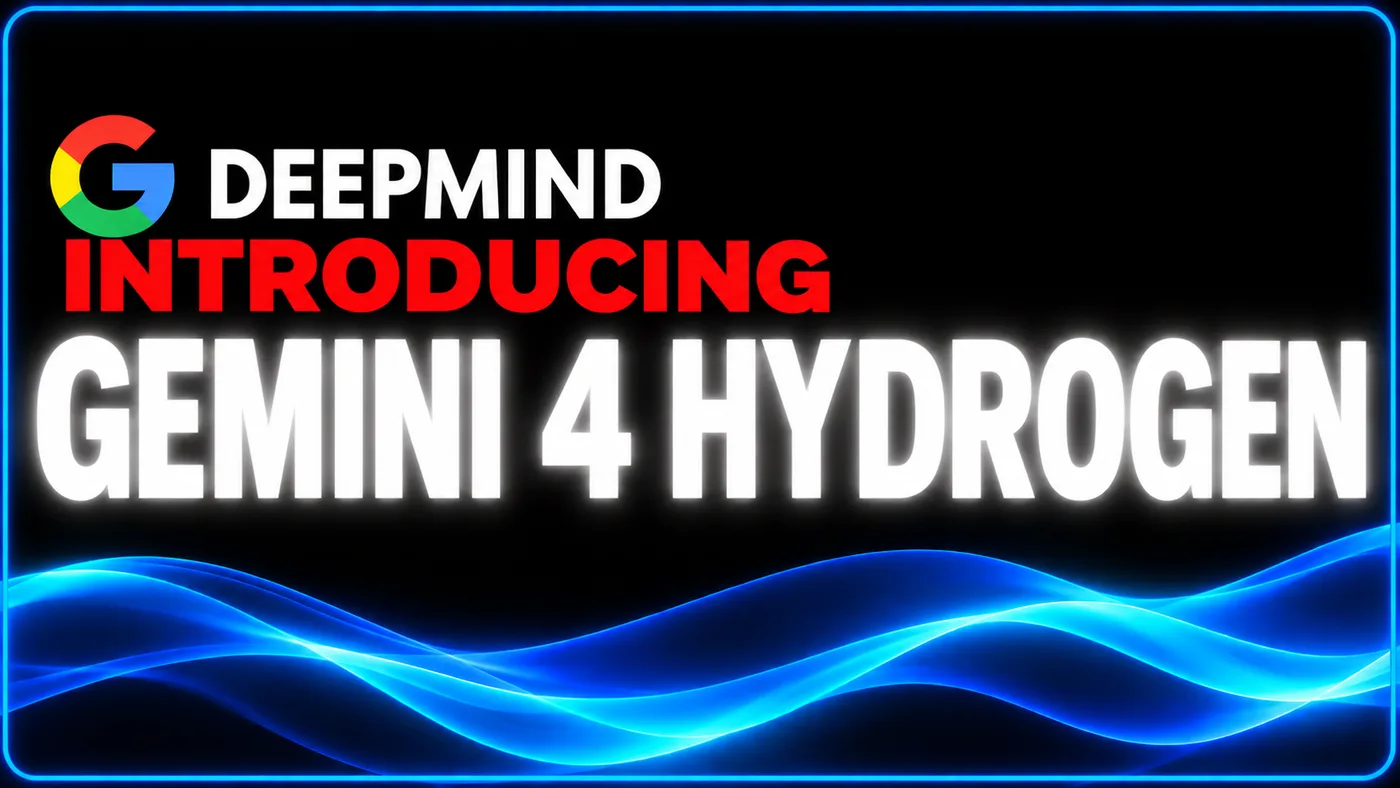
Model Quick-Spec Sheet
Verified Metadata- Model Identifier
- Gemini 4 Hydrogen
- Developer
- Google DeepMind
- Release Status
- General Availability
- Key Capability
- High-Speed Agentic Execution & 1M I/O
- Context Window
- 1,000,000 In / 1,000,000 Out
- Licensing
- Cloud API / Proprietary
Just hours after internal telemetry from Google’s Jetski evaluation clusters pointed toward an imminent release, Google DeepMind officially launched Gemini 4 Hydrogen on November 12, 2026. Arriving alongside Gemini 4 Argon (released September 30) and Gemini 4 Carbon (released October 28), Hydrogen completes the three-tier Gemini 4 lineup across consumer interfaces and enterprise cloud infrastructure.
On paper, Gemini 4 Hydrogen serves as Google’s high-velocity, lowest-cost successor to the retired “Flash” tier. Under standard model hierarchies, that positioning would imply lower benchmark fidelity across the board. However, independent audits from Artificial Analysis and DeepMind’s official model card reveal an engineering anomaly: running at default settings, Hydrogen directly surpasses the pricier four-week-old Gemini 4 Argon across software engineering evaluations—all while generating tokens nearly three times faster than Carbon and steering clear of an upcoming December 1 API price increase.
The Architectural Secret Inside DeepMind’s Model Card
The underlying explanation for Hydrogen’s unexpected performance lies in its training lineage. Standard model families typically derive their lightweight checkpoints through progressive downward distillation: Flagship (Carbon) down to Mid-Tier (Argon), then down to Lightweight (Hydrogen).
DeepMind inverted this protocol. Instead of distilling Hydrogen from Argon, engineering teams adapted Hydrogen directly from Gemini 4 Carbon—Google’s flagship model built for deep cybersecurity auditing and long-horizon systems architecture. By inheriting weights, heuristics, and reasoning reflexes directly from Carbon, Hydrogen preserves multi-step planning and tool-calling execution patterns that typically require significantly larger parameter footprints.
# Gemini 4 Architectural Lineage Manifest
family: "Gemini 4 Frontier"
lineage:
  carbon: "Primary Flagship Checkpoint (Cybersecurity & Long-Horizon Systems)"
  argon: "Mid-Tier Dense Specialist (Lowest Hallucination Baseline)"
  hydrogen: "Direct Carbon-Derived High-Speed Engine (Agentic Execution)"
context_topology:
  input_context: 1_000_000 # tokens
  long_decode_output: 1_000_000 # tokens
  native_multimodal: [".docx", ".pptx", ".xlsx", "video", "audio"]
At the systems level, all three Gemini 4 variants introduce three shared infrastructure upgrades over the Gemini 3.8 generation:
- Symmetric 1M Token Context & Output Decoding: Every Gemini 4 variant natively supports a 1,000,000-token input window alongside up to 1,000,000 output tokens via long-decode execution. For repository-wide refactoring and dense AST transformation, this permanently removes the 64,000-token output bottleneck that constrained Gemini 3.8 Flash.
- Native Document & Video Parser: Hydrogen ingests inline Microsoft Word (
.docx), PowerPoint (.pptx), and Excel (.xlsx) files without external pre-processing microservices, paired with temporal video comprehension and implicit prompt caching for workloads exceeding 4,096 tokens. - Four Configurable Thinking Budgets: Hydrogen exposes four granular reasoning modes:
low,medium,high(default), and a newly introducedx-high(extra-high) thinking tier.
Independent Benchmark Audit: Hydrogen vs. Carbon vs. Argon
Comprehensive multi-suite benchmarking across standardized evaluation rigs reveals how the three models trade latency, reasoning depth, and raw task throughput.
| Evaluation Suite / Metric | Gemini 4 Hydrogen | Gemini 4 Argon | Gemini 4 Carbon |
|---|---|---|---|
| AA Intelligence Index (v5.0.1) | 51 (high) / 54 (x-high) |
50 (high) |
60 (high) |
| SWE-sweep (Software Engineering) | 13.5% | 4.3% | 9.6% |
| Plotly Data Analytics Exam | 43 / 43 ($6.36 run cost) | Lower (2x+ cost) | Lower (2x+ cost) |
| Terminal-Bench 4.0 | 54.0% | 57.1% | 65.2% |
| Terminal-Bench 4.1 (vs. Claude Sonnet 5.5) | 57.0% (Sonnet 5.5: 63.9%) | — | — |
| AA-Omniscience Hallucination Rate | 8.5% | 4.3% (Lowest) | 11.4% |
| Zapier Automation-Bench | ~51.0% | ~51.0% | 53.9% |
| Throughput Speed | ~200 output tok/s | Standard | ~76 output tok/s |
On the Artificial Analysis Intelligence Index (v5.0.1), Carbon takes the crown with a score of 60. However, Hydrogen reaches 54 at x-high and 51 at its default high setting—surpassing Argon’s default of 50, while streaming tokens at ~200 tokens per second compared to Carbon’s 76 tokens per second.
In real-world engineering evaluations, the separation is stark:
- Repository-Scale Coding: On SWE-sweep, Hydrogen notched 13.5%, beating both Argon (4.3%) and Carbon (9.6%). Its faster token generation prevents execution timeouts in complex iterative compiler feedback loops.
- Analytics Precision: On the Plotly Data Analytics Exam, Hydrogen secured a perfect 43/43 at an aggregate API cost of $6.36—less than half the compute spend required by Carbon or Argon.
Critical Engineering Trade-offs: Where Hydrogen Struggles
Despite its remarkable price-to-performance ratio, production teams should note three areas where Hydrogen still lags behind its sibling models:
- Terminal & CLI Environments: On Terminal-Bench 4.0, Argon maintains an advantage over Hydrogen (57.1% vs. 54.0%), while Carbon leads the field at 65.2%. In head-to-head evaluation against Anthropic’s Claude Sonnet 5.5 (63.9%), Hydrogen finishes roughly seven points behind.
- The
x-highThinking Cost Trap: Pushing Hydrogen intox-highlifts its Intelligence Index from 51 to 54, but nearly doubles token consumption, pushing task cost from $1.87 to $3.16. On Terminal-Bench,x-highyielded a 0% delta. For standard microservices and agent loops,mediumorhighdelivers the optimal efficiency frontier. - Factual Grounding & Hallucinations: On AA-Omniscience, Argon remains the most grounded model in Google’s lineup with an industry-low 4.3% hallucination rate, compared to 8.5% for Hydrogen and 11.4% for Carbon. For compliance-critical RAG and legal contract extraction, Argon retains a clear technical justification.
The December 1st API Pricing Trap & Unit Economics
Cloud budgeting takes center stage on December 1, 2026, when temporary introductory discounts for Argon and Carbon expire on Google AI Studio and Vertex AI:
| Model Tier | Input Price (Per 1M Tokens) | Output Price (Per 1M Tokens) | Cached Read Rate | Long-Context Surcharge |
|---|---|---|---|---|
| Gemini 4 Hydrogen (Standard) | $1.50 | $7.50 | $0.075 | None (up to 1M) |
| Argon & Carbon (Through Nov 30, 2026) | $2.00 | $10.00 | Standard | None |
| Argon & Carbon (Starting Dec 1, 2026) | $4.00 | $20.00 | Standard | None |
Once the calendar turns to December, Argon and Carbon will cost 2.67x more per token than Hydrogen. Furthermore, running workloads through Google’s Batch or Flex API cuts Hydrogen’s standard $1.50 / $7.50 rates by another 50%.
Crucially, raw per-token rates can mislead agent architects. Legacy Gemini 3.8 Flash is listed at $0.75 input and $3.75 output. Yet in empirical agentic benchmarks, 3.8 Flash required 126 million output tokens, running for 14.8 minutes per task at an average cost of $7.77. Hydrogen completed the identical task suite in 8.3 minutes for $1.87—rendering Hydrogen roughly 4x cheaper per completed real-world task.
Antigravity Orchestrator: Dynamic Hybrid Routing
To prevent developers from making an all-or-nothing trade-off between Carbon’s reasoning depth and Hydrogen’s speed, Google rolled out Orchestrator within the Google Antigravity IDE.
Rather than relying on static initial prompt classification, Antigravity Orchestrator deploys bidirectional mid-session switching:
- Architectural Scaffolding: Gemini 4 Carbon inspects the repository graph, evaluates module boundaries, and formulates the implementation blueprint.
- High-Velocity Codegen: Execution immediately delegates to Gemini 4 Hydrogen, generating diffs, boilerplate, and unit tests at 200 tokens/sec.
- Dynamic Escalation: If compiler errors or failing unit tests exceed localized recovery heuristics, execution immediately escalates back to Carbon for root-cause diagnosis.
In internal benchmarks, Orchestrator delivered parity with standalone Carbon execution while consuming 24% less frontier quota and finishing tasks 19% faster.
Ecosystem Access Matrix (November 2026)
Availability across consumer applications and developer workspaces is structured as follows:
| Plan / Platform | Monthly Price | Consumer Gemini App | Developer & Antigravity Access | Limitations & Policy |
|---|---|---|---|---|
| Free Tier | $0 | Auto-router only (falls back to 3.5 Flash-Lite) | Free Hydrogen in AI Studio & API | AI Studio free tier logs data for product improvements |
| Google AI Plus | $4.99 | Manual Hydrogen picker + 2x limits | Standard developer tier | Argon, Carbon, and Tasks remain locked |
| Google AI Pro | $19.99 | Hydrogen + Argon in chats & Tasks (4x limits) | Argon in AI Studio + $10/mo Cloud credits | Carbon remains locked across all tools |
| Google AI Ultra | $100–$200 | Hydrogen + Argon + Carbon (5x Pro limits) | Full Carbon access + Carbon Orchestrator | Highest consumer tier |
Critical Caveats on Trials & Student Offers
- 1-Year Student Offer (Valid Through Dec 31, 2026): Verified students aged 18+ can secure 12 free months of Google AI Pro (US) or Google AI Plus (international). Subscriptions renew automatically, making calendar reminders essential.
- Antigravity Feature Gates: Consumer free trials for Google AI Pro unlock Argon inside the Gemini web app, but Google explicitly gates Antigravity Orchestrator behind active paid subscriptions. All Gemini 4 models remain proprietary cloud deployments; offline requirements must still be addressed with Gemma 4.
Production Deployment Verdict
For 85% of day-to-day AI engineering workloads—including interactive code generation, document parsing, analytics synthesis, and agentic workflows—Gemini 4 Hydrogen operating at medium or high effort provides the highest economic and operational leverage in frontier AI.
Reserve Gemini 4 Carbon for high-complexity domain modeling, security audit sweeps, and high-level planning inside Antigravity Orchestrator. Finally, re-evaluate Gemini 4 Argon pipelines before December 1: unless your workload demands its industry-leading 4.3% hallucination floor for compliance or legal verification, Hydrogen is now Google’s definitive default engine.
Watch & Follow
Video Breakdowns & Real-Time Leak Alerts
Subscribe to The Learn Up on YouTube for full model walkthroughs and follow @the_learn_up on X for instant benchmark drops and corroborated leak updates.
Written By
Md Faysal Ahmed
Md Faysal Ahmed is the Founder & Editor-in-Chief of The Neural Dispatch and the creator behind The Learn Up (@thelearnup) YouTube channel, covering frontier AI model releases, benchmarks, and verified industry leaks.
Related Dispatches
All reports →
Welcome to The Neural Dispatch: Our Standards for Tracking Frontier AI & Leaks
An introduction to The Neural Dispatch by Founder & Editor-in-Chief Md Faysal Ahmed—outlining our three-tier leak verification rubric, benchmark discipline, and coverage roadmap.